
8 ways to take your acting career to the next level
Solidify your Foundation
Strong performance instincts are the gateway to an acting career. They get you in the audition room. But what happens when instincts fail? Well, technique takes over.
Having a strong foundation in acting technique is essential for soon-to-be professional actors. You won’t be perfect for every role you audition for; but understanding the fundamentals of actions, objectives, stakes, and tactics will help you deliver a strong performance every time.
Do a Voice Warm up Everyday
 Some actors think you only have to warm up your voice before a performance. Wrong! A professional actor will warm up their voice everyday. A solid warm warm up will strengthen the voice, and deepen your vocal awareness.
Warming up everyday will keep you vocally nimble and ready to play at the drop of a hat. You also won’t lose your voice at the game!
Get to Know your Body
The body is one of the most valuable expressive tools for actors. It screams subtext in moments of silence; it says everything the words don’t say and more. Actors spend years developing physical awareness. It’s not about going to the gym and making your body tense. It’s about creating a free, open, and expressive body.
Professional actors train in feldenkrais, yoga, martial arts, and gymnastics. If you want to take your acting to the next level, get to know your body.
Read the Classics
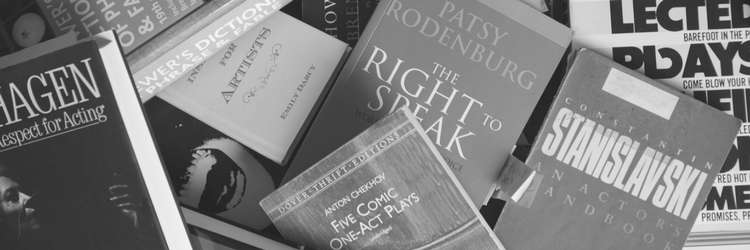 You can’t be an actor without knowing the classics. Read Greek plays, Elizabethan plays, Jacobean plays. Read a Shakespeare play a week until you’ve read the complete works. Use a dictionary so you understand every single word and turn of phrase. Become a connoisseur of language; a lover of words.
Oh, and don’t just read plays, watch them! You don’t have to watch the most expensive production in town, any production will do. Listening to other actors grapple with archaic language will give you an idea of the work required to perform classic texts.
Learn the Language
A massive part of being an actor is being able to interpret direction. In order to be able to do that effectively you need to learn the language of contemporary acting.
A fluid, articulate dialogue between actor and director is essential for great theatre and film. There are some contemporary acting books that you just have to read.
For example, you should read anything and everything from Stanislavski, Uta Hagen, and Declan Donnellan. What’s the worst that could happen?
Refine your Process
After absorbing all of the theories of others, it’s time to refine your own process. It’s not enough to understand acting on an intellectual level. Acting is a practical craft. You need to refine what works for you.
Professional actors know how to quickly and effectively break down a scene. Learning your process will improve your audition turn around without losing any quality in the work. If one acting technique doesn’t makes sense to you, throw it away. No method is better than any other method; good acting is good acting.
Get in Front of a Camera
 Acting for screen is going to make up at least 50 percent of your work as an actor. It’s your bread and butter. Whether it’s for a commercial, tv show, web series, short film, or feature film; being comfortable in front of the camera is crucial.
If you haven’t had the opportunity to work on film, it’s time to start filming scenes and monologues. Once you feel comfortable with that, move onto short films or sketch comedy. The days of waiting for the phone to ring are over. You have to be proactive. Get in front of the camera.
Build your Audition Tool Kit
Landing roles in theatre, film, or television isn’t just about acting. It’s about being a professional actor. What does that mean? Well, it means having a professional tool kit to get you into the audition room, and to help you land roles. You need an excellent headshot that looks like you. A showreel that shows your range. An agent who knows your talents. And relationships with casting directors that a based on mutual respect. Is your tool kit up to scratch?